
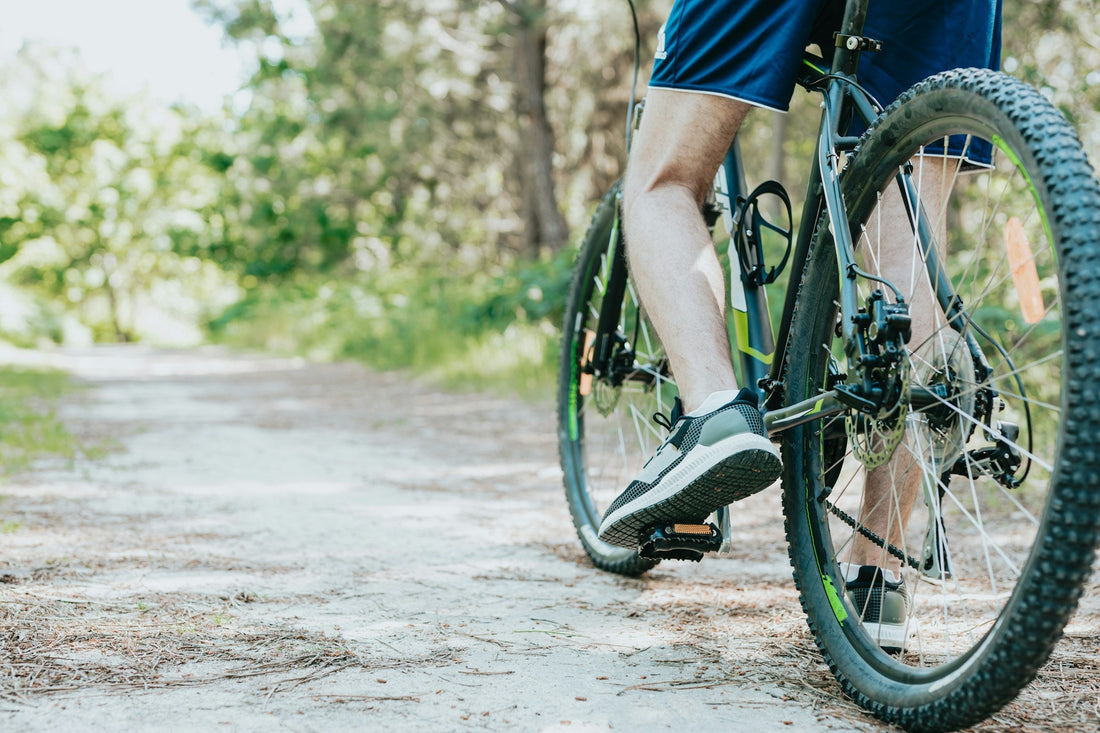
Bike Size Guide: finding the right balance between comfort and performance
Choosing the right bike size is essential for comfortable riding, preventing injuries, and improving performance. Contrary to simply being a matter of height, bike size also depends on your riding style, body type, and goals. Whether you are a beginner, a touring cyclist, or a competitor, a good match between your size and the frame will allow you to optimize your rides.
How to choose your bike size?
1. Based on your height
The general rule:
👉 the frame size (in cm) generally corresponds to 65% of your inseam (measured barefoot).
- Beginner / recreational use: choose a slightly smaller frame → easier to handle, more upright and comfortable position.
- Regular rider: opt for the standard size adapted to your inseam → good balance between efficiency and comfort.
- Competitor / performance-oriented: a slightly larger frame allows for a more extended and aerodynamic position.
2. Based on your riding style
- Road bike: a frame adjusted as closely as possible to your inseam to optimize performance.
- Mountain bike: slightly smaller frame for more maneuverability on descents and technical terrain.
- Gravel / Cycle Touring: intermediate frame to combine comfort and efficiency over long distances.
- City bike: more compact frame to facilitate getting on/off and frequent stops.
3. Based on your body type
- Cyclists with long legs: opt for a higher frame, but check the top tube length to avoid being too stretched out.
- Cyclists with a long torso: choose a slightly longer frame, or adjust with an appropriate stem.
Bike size chart (frame in cm)
| Rider Height | Road Bike | Gravel / Touring | MTB (size in inches) |
|---|---|---|---|
| 150 – 160 cm | 47 – 49 cm | 46 – 48 cm | 14 – 15" |
| 160 – 170 cm | 50 – 52 cm | 49 – 51 cm | 15 – 16" |
| 170 – 175 cm | 52 – 54 cm | 51 – 53 cm | 16 – 17" |
| 175 – 180 cm | 54 – 56 cm | 53 – 55 cm | 17 – 18" |
| 180 – 185 cm | 56 – 58 cm | 55 – 57 cm | 18 – 19" |
| 185 – 190 cm | 58 – 60 cm | 57 – 59 cm | 19 – 20" |
| 190 – 200 cm | 60 – 62 cm | 59 – 61 cm | 20 – 22" |
Common mistakes to avoid
- Choosing a frame that is too large → uncomfortable position, risk of back and knee pain.
- Neglecting the inseam: actual height is not enough, inseam is the key measurement.
- Ignoring the riding style: a road bike and a mountain bike are not chosen on the same basis.
- Relying solely on the label (S, M, L) → each brand has its own sizing system.
Expert tips
- Have your inseam measured accurately: it is the most reliable reference.
- If in doubt between two sizes, take the smaller one → more maneuverable and adjustable with the stem or seatpost.
- Test ride the bike before buying: the feeling of comfort takes precedence over the numbers.
- Consider adjustments (saddle, handlebars, stem): they allow you to perfectly refine your position.
Your bike size is the key to riding with pleasure, without pain and with maximum efficiency. By taking into account your height, riding style, and body type, you will find the frame perfectly suited to your needs.
To find all the tips for choosing the right size for your equipment, check out our ultimate guide here


